Fields with substance
Four new opening studies give the field an interior, a silhouette, and a physical-looking body.
The color round made Dipole the most promising starting point. Its nested families gave the eye a path into the object, but the lines needed more substance. This round builds four new bodies around that idea: layers, visible interiors, and color carried by the geometry.
Flux core
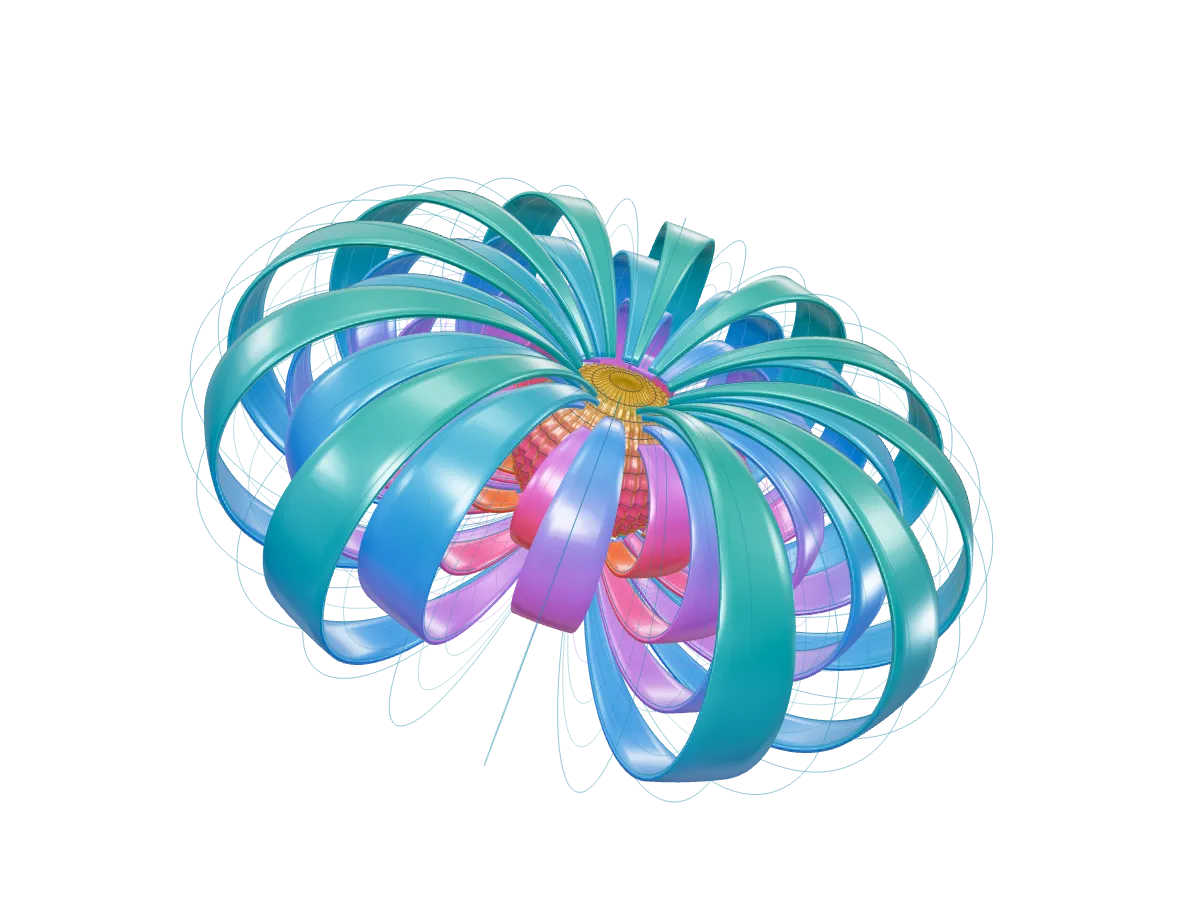
Forty thick ribbons occupy four nested shells around a ribbed core. Their centerlines follow the same dipole family as the earlier model. Finite width, closed ends, and a warm interior turn that scaffold into a substantial object. Finer lines continue between the surfaces, and two gaps in the outer layers reveal the center.
The ribbon thickness, colors, gaps, and core are authored choices. This is a field-inspired sculpture; it does not simulate magnetic material or map measured field strength.
Toroidal weave
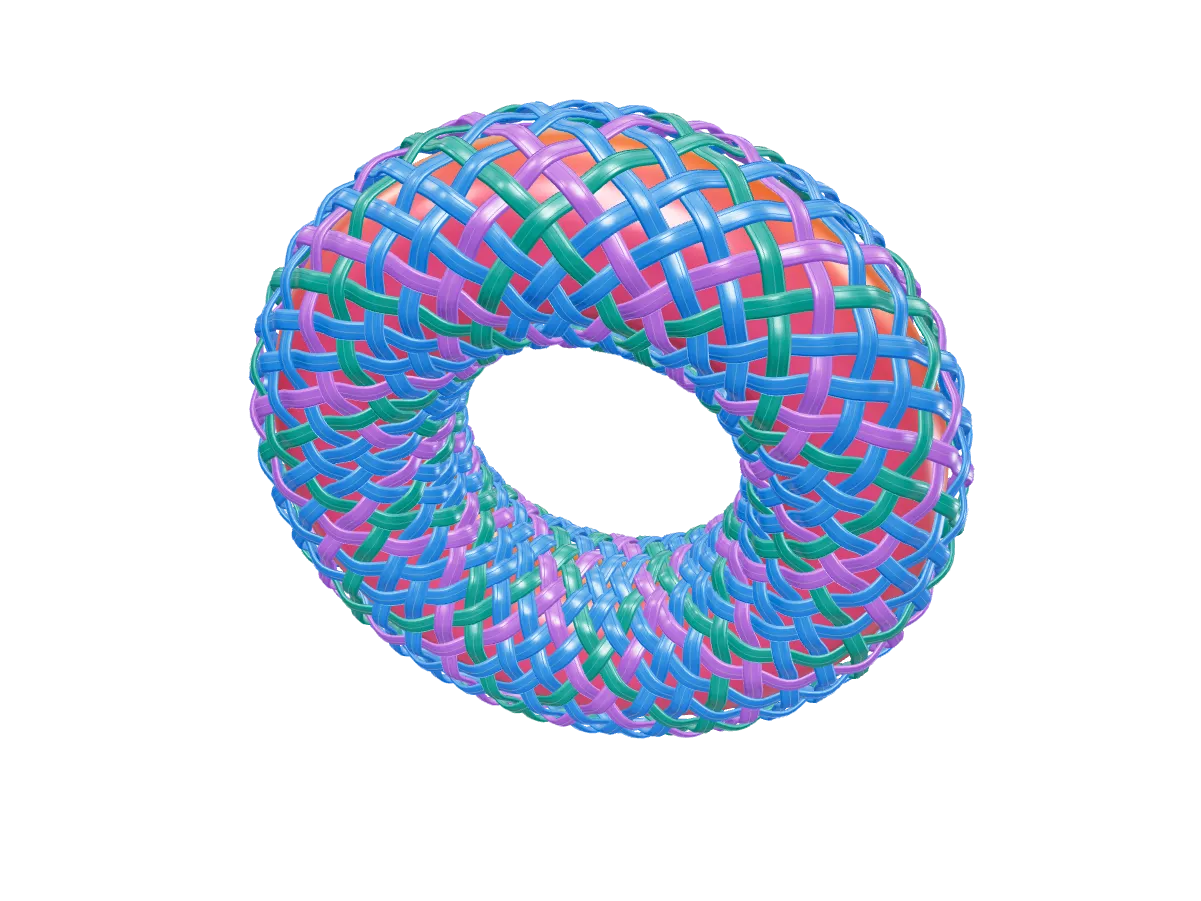
A rose and ochre torus supports two counterwound families of twelve strands. Their phase follows . Alternating radial lift suggests an over-and-under weave, while fine fibers reveal its direction at close range. The broad silhouette remains a simple loop with an open center. This is a parametric construction, not a collision-tested textile model.
Vortex
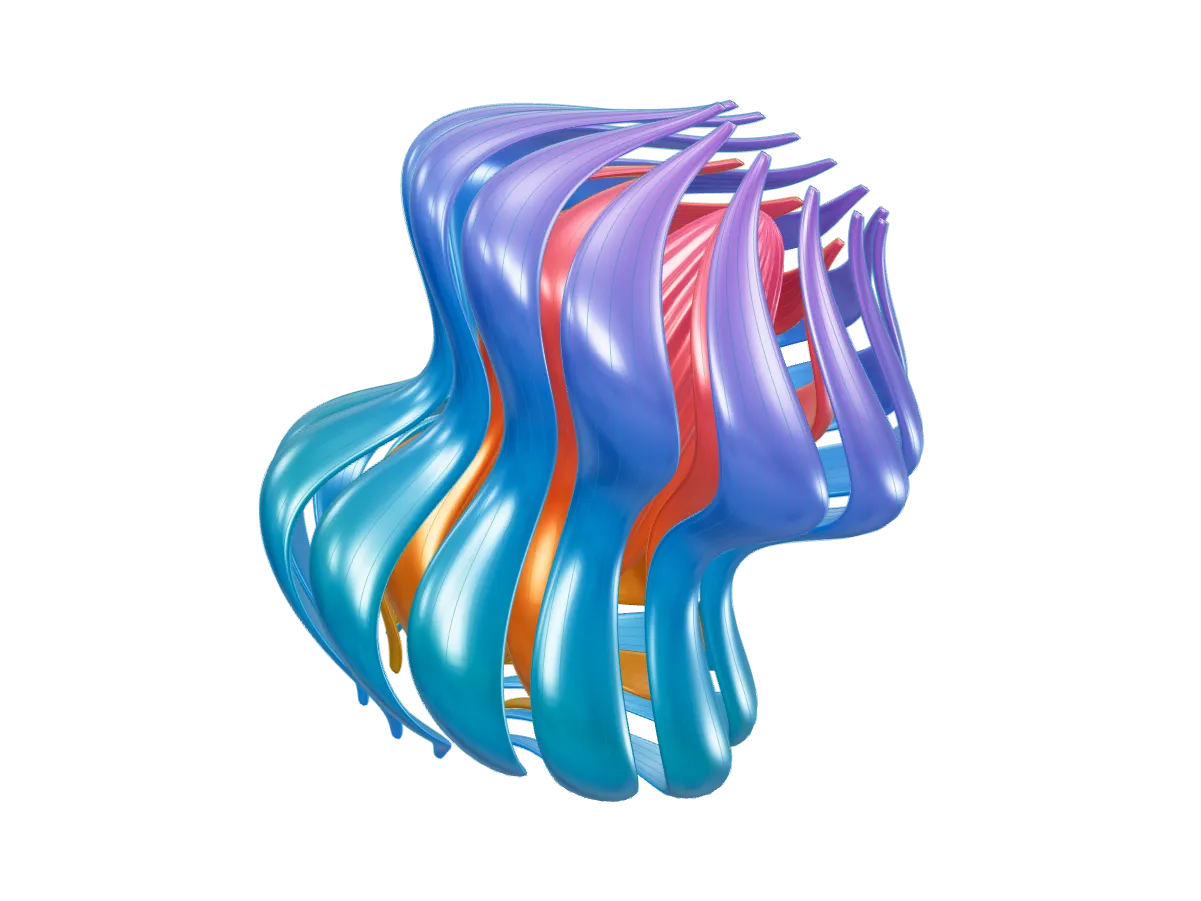
Twelve outer ribbons sweep around six warm inner ribbons and a fluted center. Each ribbon has a closed, lens-shaped cross section; engraved traces give the broad surfaces detail. The narrow waist and diagonal pose make this the most directional composition. The name describes its form, rather than a computed fluid flow.
Knot core
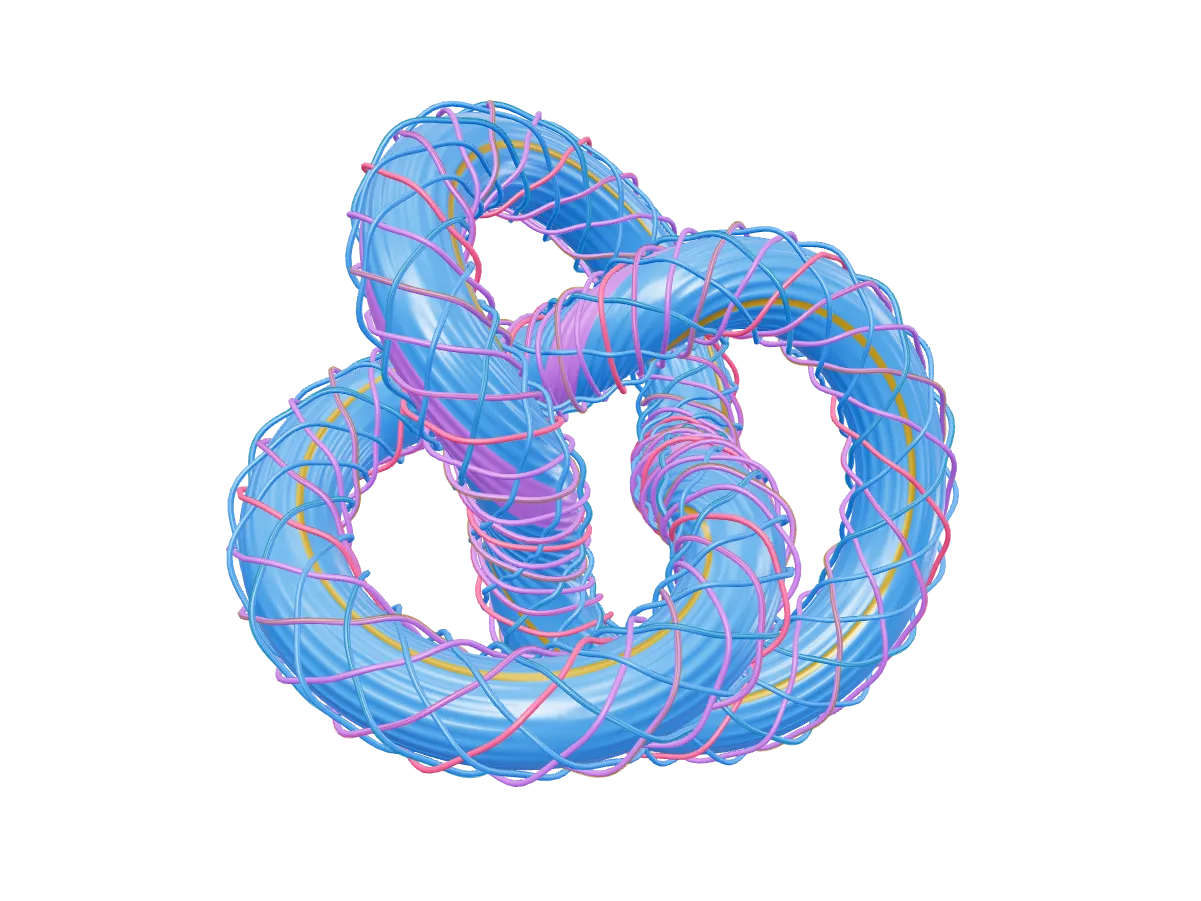
A thick, fluted tube follows a trefoil. Ten smaller counterwound strands, warm inlays, and fine cyan filaments follow its local frame. The crossings give the object a recognizable silhouette; the braid gives it detail when enlarged. No separate pieces orbit the main body.
Keep the artwork editable
All four are pure TypeScript geometry in src/components/forms/: flux-core.ts, toroidal-weave.ts, vortex-body.ts, and knot-core.ts. The shared renderer supplies lighting, quiet motion, drag, zoom, keyboard controls, and reduced-motion handling. Technical annotations are optional and start hidden in this round.
The stills above are captures of those actual meshes. docs/art/capture-field-studies.cjs reproduces them; src/assets/fields/ holds the sources used for comparison cards and graphics fallbacks. The homepage guide explains which files to edit. The studies remain available for comparison. Flux core was subsequently selected for the homepage opening.